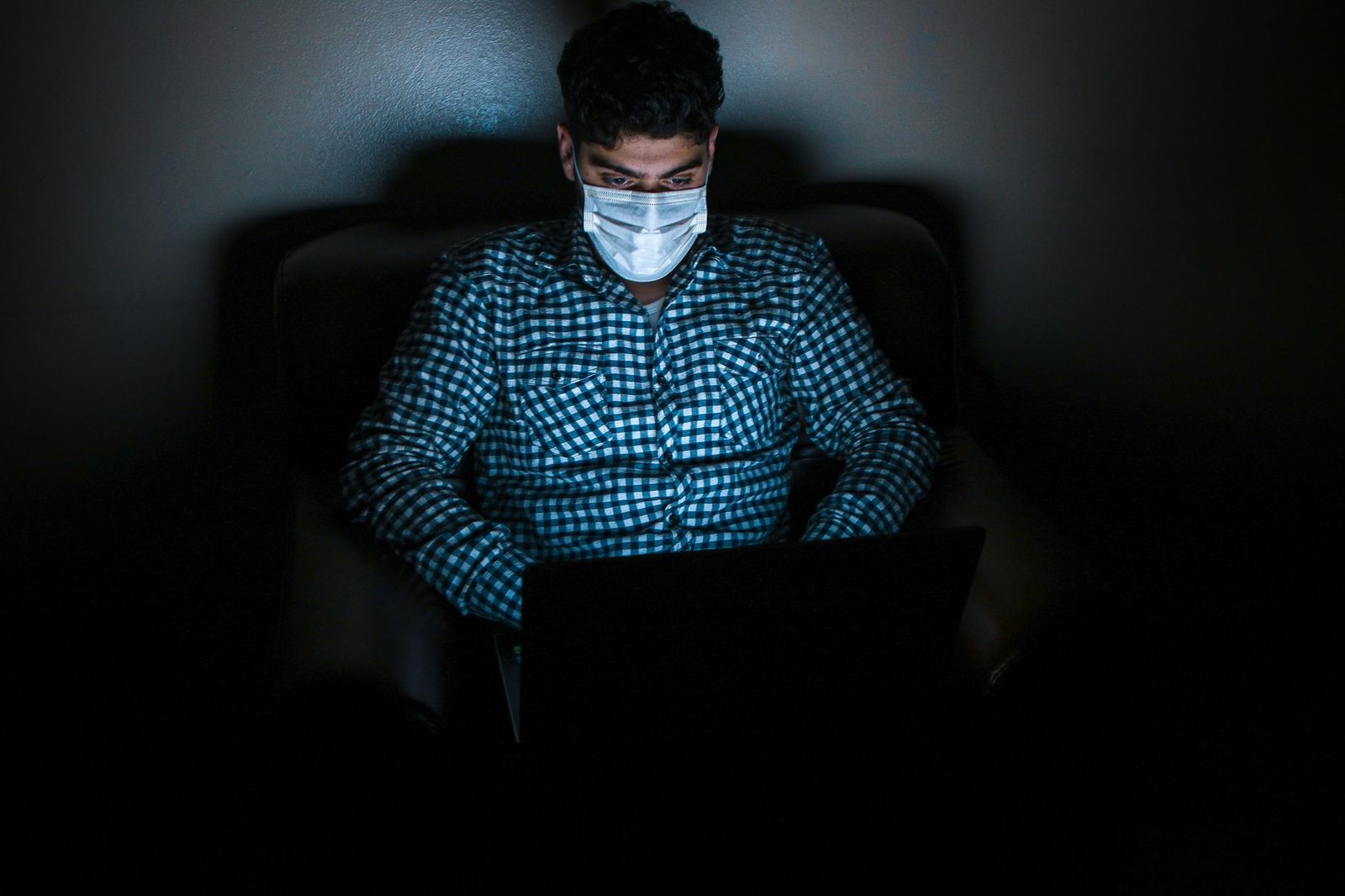
There is one sentence family caregivers hear on a loop, and it eventually produces the opposite of its intended effect: "You're amazing, I don't know how you do it." It is sincere. It is also the most convenient exit door for the person saying it, because once it's been said, there is nothing left to offer. The caregiver smiles, replies "you just do what you can," and goes back to the kitchen to prepare the evening medication.
According to the Direction de la recherche, des études, de l'évaluation et des statistiques (DREES), France has between 9 and 11 million family caregivers, a majority of them women, and nearly one in two holds a job at the same time. The Caisse nationale de solidarité pour l'autonomie (CNSA) and work by the France Alzheimer association have long documented the physical consequences of this role: exhaustion, sleep disorders, excess mortality among elderly spousal caregivers. What shows up less in the figures is the most ordinary and most corrosive phenomenon of all: the gradual shrinking of the social circle.
Because the problem isn't just the workload. It's that a caregiver's social life erodes without any decision, any break, any argument. You cancel once, twice, five times. After a year, you no longer cancel: you're no longer invited. And you find yourself at 10 p.m. in a silent living room, with a loved one sleeping in the next room who is no longer quite a conversation partner.
It is in that hollow that a quiet use of random video chat has taken hold. Not flirting, not entertainment: simply the fact that at 10:40 p.m., without leaving the house, without disturbing anyone, without explaining anything, there is a place where someone is available to talk about nothing for ten minutes. This article describes that use as it is, and points to the exact place where it reaches its limit.
A house arrest nobody ever pronounced
The calendar empties itself
A caregiver never decides to cut themselves off from the world. They turn down an evening out because the previous night was rough. They give up a weekend because no one could take over. They decline a dinner because coming home at midnight means getting up at 6 a.m. for washing and dressing. Every refusal is reasonable. It's their accumulation that produces the effect.
DREES studies on caregivers of dependent elderly people consistently find the same reported triad: fatigue, a feeling of isolation, and the abandonment of leisure activities. The third point is the one least talked about, because it looks trivial next to the other two. It isn't: it's the one that feeds the first two.
A spatial constraint, not just a temporal one
What makes caregiving distinctive, compared with other forms of isolation, is that it is geographically locked. A night-shift worker can go out on Saturday. An expat can make friends locally. A caregiver of a dependent person often cannot leave the home for more than forty minutes at a stretch.
That changes everything about the nature of the solution being sought. The usual advice — "join a club," "see your friends," "get some exercise" — assumes a mobility that doesn't exist. What remains accessible is whatever comes into the house. The phone, video calls with relatives, and, for some, video chat with strangers.
The caregiver label sticks to your skin
The third mechanism is the most insidious. After a few months, every available conversation is about the illness. Your sister calls to ask how Mum is doing. The GP asks for an update. The loyal friend, the one who stayed, opens with "so, how's it going?"
These conversations are useful. They are also exhausting, because they constantly send the caregiver back to their role. Many describe the sensation of having stopped being a person and become a function. This isn't emotional loneliness: it's an identity deprivation.
Why a stranger, precisely
The other person's ignorance is the service rendered
What gives random video chat its value here is counterintuitive: the stranger knows nothing. They know neither the diagnosis, nor the name of the hospital department, nor the family history. So they won't ask "and the test results?" They'll ask "what kind of music do you listen to?"
For ten minutes, the caregiver becomes someone who loves 90s rock again, who has an opinion on Miyazaki films, who finds cats more interesting than dogs. This isn't escapism: it's an identity reactivation, and it has real clinical value. Psychologists who work with caregivers — particularly in the respite centers funded by the ARS — stress this distinction: respite isn't just free time, it's time when you aren't a caregiver.
No relational debt
The second reason is more down to earth. Calling a friend at 10:40 p.m. creates an obligation: you'll have to call back, listen in turn, apologize for having been absent for six months. Many caregivers stop calling because they know they can't return the favor.
A random conversation creates no debt. It ends, and leaves nothing to manage. For someone whose mental load is already saturated with appointments, prescriptions and disability paperwork, the absence of any follow-up obligation isn't a flaw in the format: it's its main function.
The brevity matches the reality on the ground
A caregiver doesn't have evenings. They have intervals: between bedtime and the first nighttime alert, during a nap, the length of a wash cycle. Random video chat cuts off without warning and without explanation. You close the tab, go check what's happening in the bedroom, and you've left nothing hanging.

Making it workable in a shared home
The practical difficulty is specific: the caregiver doesn't live alone, and the person being cared for is often sleeping a few meters away. A few equipment adjustments change the experience radically.
Sound before picture
This is the most important point. Speaking in a whisper degrades the conversation — the other person keeps asking you to repeat, fatigue sets in, you give up. A noise-cancelling headset lets you speak at a very low volume while staying intelligible, and above all keeps the other person's voice from filling the room. Slim-headband models designed for remote work are more than enough; there's no need to aim for studio gear.
For those who want to keep an ear on the next room, there's a simple trick: use only one earpiece, or choose a model with a transparency mode. Hearing your loved one call remains more important than conversation quality.
Light without lighting the whole room
Switching on the ceiling light at 11 p.m. wakes the house. A small dimmable LED lamp, placed behind the screen and aimed at your face, provides enough light to be seen properly without turning the living room into a waiting area. Clip-on models, which attach to the edge of the screen, fit in a drawer and can be put away in five seconds — no small detail when you'd rather the rest of the family didn't comment on your setup.
A workstation that isn't the sofa
Many caregivers use their phone, lying down, half asleep. The result is poor: framing from below, a tired arm, conversations cut short. A laptop stand or just an adjustable tablet stand on the kitchen table puts the camera at eye level and changes your posture — and therefore the quality of your presence.
A simple principle: if the setup takes more than two minutes, it won't be used. Anything that doesn't unfold instantly ends up at the back of a cupboard.
The noise-cancelling question, in reverse
Some caregivers report the opposite of the usual problem: they're not the ones making noise, the environment is — a TV left on, an oxygen concentrator, people coming and going. In that case, active noise-cancelling headphones make it possible to step out of a permanent background hum for a few minutes, provided you remain reachable. It's also one of the rare items that serves a purpose outside video chat: reading, listening to music, catching your breath.
What random video chat will not do
We need to be clear on this point, because the article would be useless if it were selling a cure.
It is not respite care
Respite, in the sense of official schemes, means a third party taking over: day care, temporary accommodation, in-home relief. The CNSA, the caregiver support and respite centers (PFR) and associations such as France Alzheimer, the Association française des aidants or APF France handicap offer these solutions, often underused because they're poorly known. Ten minutes of conversation do not replace forty-eight hours of relief. Nor do they replace the right to caregiver leave, paid by the CAF and documented on service-public.fr.
A caregiver who uses video chat instead of those steps makes their situation worse. A caregiver who uses it in addition holds up a little better between appointments.
It is not a therapeutic space
The stranger on the other side is neither a psychologist nor a social worker. Unloading a serious diagnosis, a difficult night or an old guilt on them almost always produces the same result: they hang up. That's not cruelty, it's the asymmetry of the format — nobody signed up for that by opening a random chat site.
For that kind of talking, there are trained listeners: the PFRs, the psychologists at local information and coordination centers (CLIC), the national helpline Avec nos proches, or caregiver support groups. Some also find a caregiver logbook useful for recording nights, treatments and how morale is holding up — both for healthcare staff and for oneself.
The warning sign not to miss
There is a precise moment when the practice turns against you. It's when sessions get longer, when you put off going to bed for "just one or two more," when you catch yourself preferring the screen at the very moment you could finally sleep. Sleep is a caregiver's most fragile resource, and the most decisive one for lasting over time.
| Use that helps | Use that harms |
|---|---|
| 10 to 20 minutes, one to three times a week | Daily sessions of more than an hour |
| Talking about something other than the illness | Recounting the illness to every stranger |
| A chosen time slot, after essential tasks | A slot stolen from sleep |
| A complement to real respite services | A substitute for seeking support |
| You close the tab without regret | You feel a void when you close it |

Three practical rules to keep it useful
1. Don't talk about your situation in the first three minutes. It feels artificial, and that's exactly the point. The goal of the session isn't to be understood: it's not having to be. If the urge to talk about it comes back too strongly, that's an indicator — it signals that the need exceeds this format and that you should call a real listener.
2. Protect anonymity, including your loved one's. Never show the room where the person you care for is sleeping, never name the facility, never let a prescription or a letter appear on screen. The privacy isn't only the caregiver's. An adhesive webcam cover remains the most reliable way to guarantee that a camera doesn't switch on at the wrong moment.
3. Set a limit before starting, not during. A timer, a gentle alarm, a rule like "I stop after the third person." Caregivers are exhausted, and an exhausted person doesn't make good decisions in real time. The decision has to be made before the tab is opened.
What remains, once the tab is closed
We shouldn't credit a few minutes of video with more power than they have. Nobody recovers from a year of isolation by discussing their favorite series with a student from Lyon. But there is something accurate in this practice, and it deserves to be named: during those minutes, nobody asks how your mother is doing.
It's very little. For someone whose entire life has been reorganized around another person, it is also a rare breath of air — renewed proof that there is still someone behind the function. The rest of the work happens elsewhere: with respite centers, the GP, the family you sometimes have to push into doing their share. Random video chat replaces none of that. It simply occupies, at 10:40 p.m., a space that nothing else occupies.
If you are a caregiver and feel you are close to breaking point, contact your department's caregiver support and respite center, your CLIC, or the Avec nos proches helpline. In the event of psychological distress, 3114 (the national suicide prevention number) is available free of charge 24/7.