There's one sentence family caregivers hear constantly, and it wears them down a little more each time: "And you, how are you doing?" Because answering honestly would take twenty minutes, because the person asking doesn't have twenty minutes, and because deep down the answer is always the same. So you say "I'm fine," you turn the question around, and the conversation drifts back to the illness, the appointments, the disability paperwork, the physio who never calls back.
According to the Direction de la recherche, des études, de l'évaluation et des statistiques (DREES), several million people in France provide regular help to a relative who has lost autonomy, is ill, or lives with a disability — estimates range from 8 to 11 million depending on the definition used. They are spouses, adult children, sometimes teenagers. Most of them also hold a job. And nearly all describe the same shrinking: social life doesn't vanish all at once, it erodes. Invitations grow sparser because you've declined three times. Friends eventually stop offering.
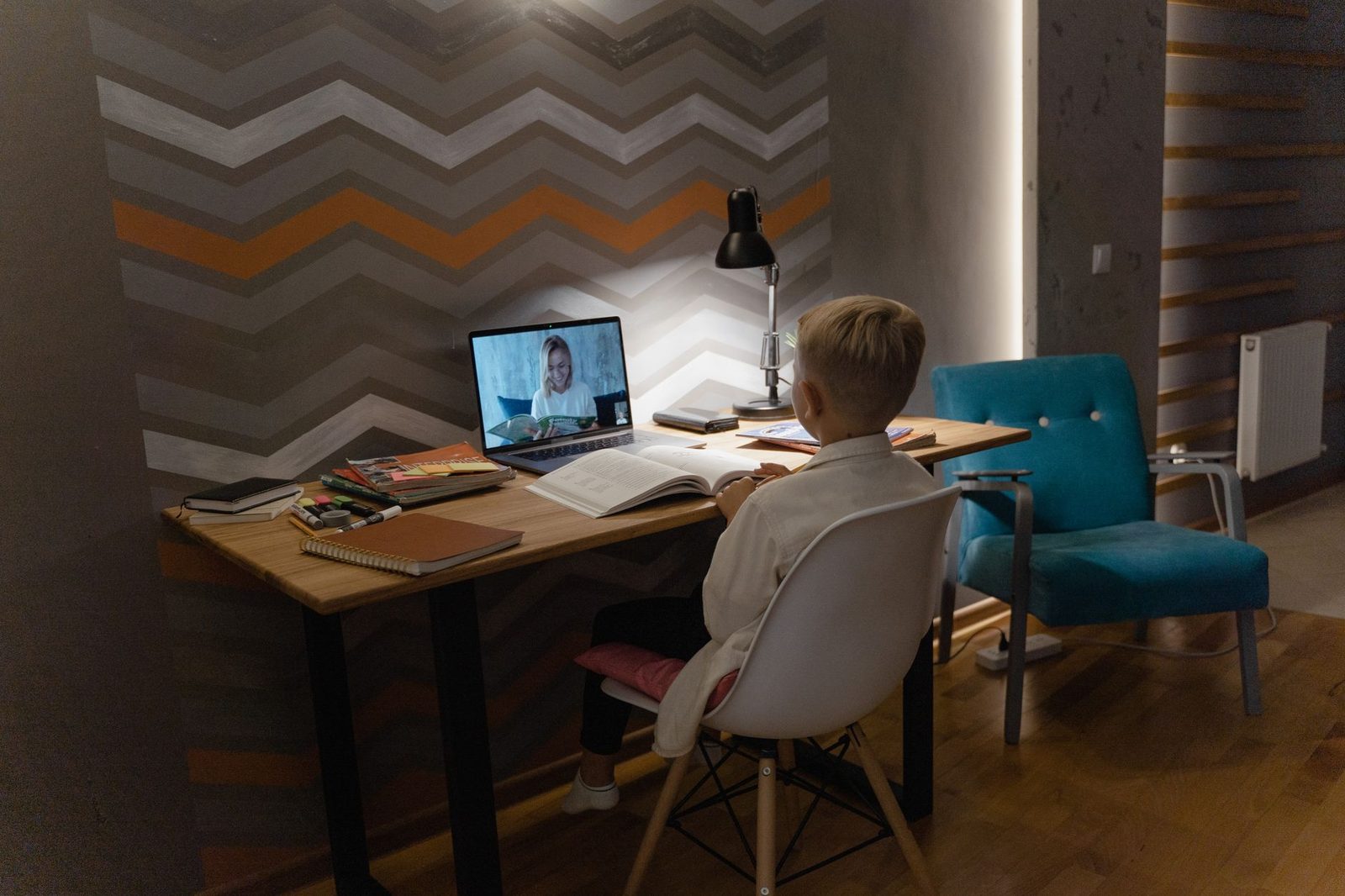
It's in that hollow that an unexpected use of random video chat has taken hold. Not flirting, not curiosity: simply the fact that between two care tasks, at 10:40 p.m., when the house is finally quiet but you're too wound up to sleep, there's a place where you can talk to someone for seven minutes without having to explain anything. This article describes that practice without idealizing it, and points precisely to where it becomes counterproductive.

Caregiver isolation isn't a shortage of people
Surrounded, in demand, and still alone
Caregivers are rarely physically alone. There's the relative, the nurses who stop by, the home care assistant, the family doctor, family on the phone. The day is saturated with interactions. But those interactions all have a purpose: they exist to organize, to report, to decide, to reassure.
What's missing is non-functional time. The kind where you talk about nothing. Where someone tells a funny story about their neighbor, where you half-heartedly argue about a TV series, where you complain about the weather. This seemingly pointless chatter has a documented psychological function: sociologists call it disinterested sociability, and its disappearance is one of the most reliable markers of subjective isolation.
The Association Française des Aidants and the Je t'Aide collective have been describing this paradox in their surveys for years: a majority of caregivers report having given up social activities, and a significant proportion report sleep disturbances, anxiety, and chronic fatigue. Santé publique France has also repeatedly raised the alarm about excess mortality and deteriorating health among those caring for dependent older adults.
The constraint isn't just about hours, it's fragmented
A night-shift worker keeps odd hours, but predictable ones. Caregivers, on the other hand, have hours full of holes. Twenty free minutes, then an alarm. A quiet hour, then a fall. You can't plan a coffee, a movie, a long phone call. You can only fill in the gaps.
Yet almost every available form of sociability demands a commitment of time: a video call with a friend means staying until the end, going out means leaving the house, even a support group means being there at exactly 6 p.m. every week. Caregivers can't guarantee that — and nothing is socially more costly than cancelling every single time.
"I can't promise anyone anything. That's the hardest part. Not the exhaustion: becoming someone people can no longer count on."
Why the random format fits this constraint
Zero commitment, zero history
Random video chat has one property its critics consider a flaw and that caregivers experience as a relief: the conversation creates no debt. You don't owe anyone an update. You don't have to follow up. If your relative calls out after three minutes, you close the tab and no one's feelings are hurt.
This absence of history has a second effect. On a chatroulette site, the stranger on the other side knows nothing about your situation. They won't ask, "So, what did the MRI show?" They won't adopt that slightly lowered voice well-meaning friends use. For seven minutes, the caregiver is simply someone who likes jazz, who has opinions about overcooked pasta, who laughs.
This is exactly the mechanism psychologists describe as the stranger on the train effect: you open up more freely to someone you'll never see again, precisely because the disclosure carries no social consequences.
Short sequences, compatible with constant vigilance
| Form of connection | Realistic minimum duration | Compatible with staying on alert? |
|---|---|---|
| Night out with friends | 2 to 4 hours | No |
| Video call with a loved one | 20 to 45 minutes | Barely |
| Caregiver support group | 1 hr 30, fixed schedule | Only with backup care |
| Text message | 1 minute | Yes, but low density |
| Random video chat | 3 to 10 minutes | Yes |
The table is blunt, but it explains everything. Random video chat is one of the rare forms of genuine human contact — face, voice, rhythm, laughter — that fits into a seven-minute gap without creating any obligation.
What it actually provides (and what it doesn't)
Three observable benefits
The return of the non-caregiver self. Many caregivers describe a gradual absorption: by talking about nothing but the illness, they become the illness. A conversation where no one knows anything reactivates other parts of the self. That's not trivial: research on identity psychology shows that a narrowed identity repertoire is a risk factor for depression.
Physiological decompression. Laughing, even briefly, with a stranger on the other side of Europe releases tension in a way silence never does. It isn't a treatment, but it's noticeable in how you feel.
Resynchronizing with the world. Landing on a student in Lisbon cramming for exams, a nurse in Montreal coming off a shift, a couple cooking dinner: it reminds you that an outside world exists. Caregivers often live in suspended time, paced by treatments. Video chat pumps ordinary life back in.
Three things it doesn't replace
Let's be clear. Random video chat does not replace:
- Organized respite care. Day centers, temporary residential stays, in-home relief: these services exist, are partly funded, and can be requested through your département, the CNSA, or dedicated caregiver support and respite platforms. The official site pour-les-personnes-agees.gouv.fr and the national caregiver helpline list these options.
- Psychological support. If burnout sets in — persistent sleep problems, irritability, dark thoughts, the feeling that you can no longer stand your relative — your family doctor remains the way in. The Mon soutien psy scheme covers reimbursed sessions.
- Lasting relationships. A stranger you met for seven minutes won't check in on you. Confusing emotional intensity with relational continuity is the main trap.
The practical setup: making the gap usable
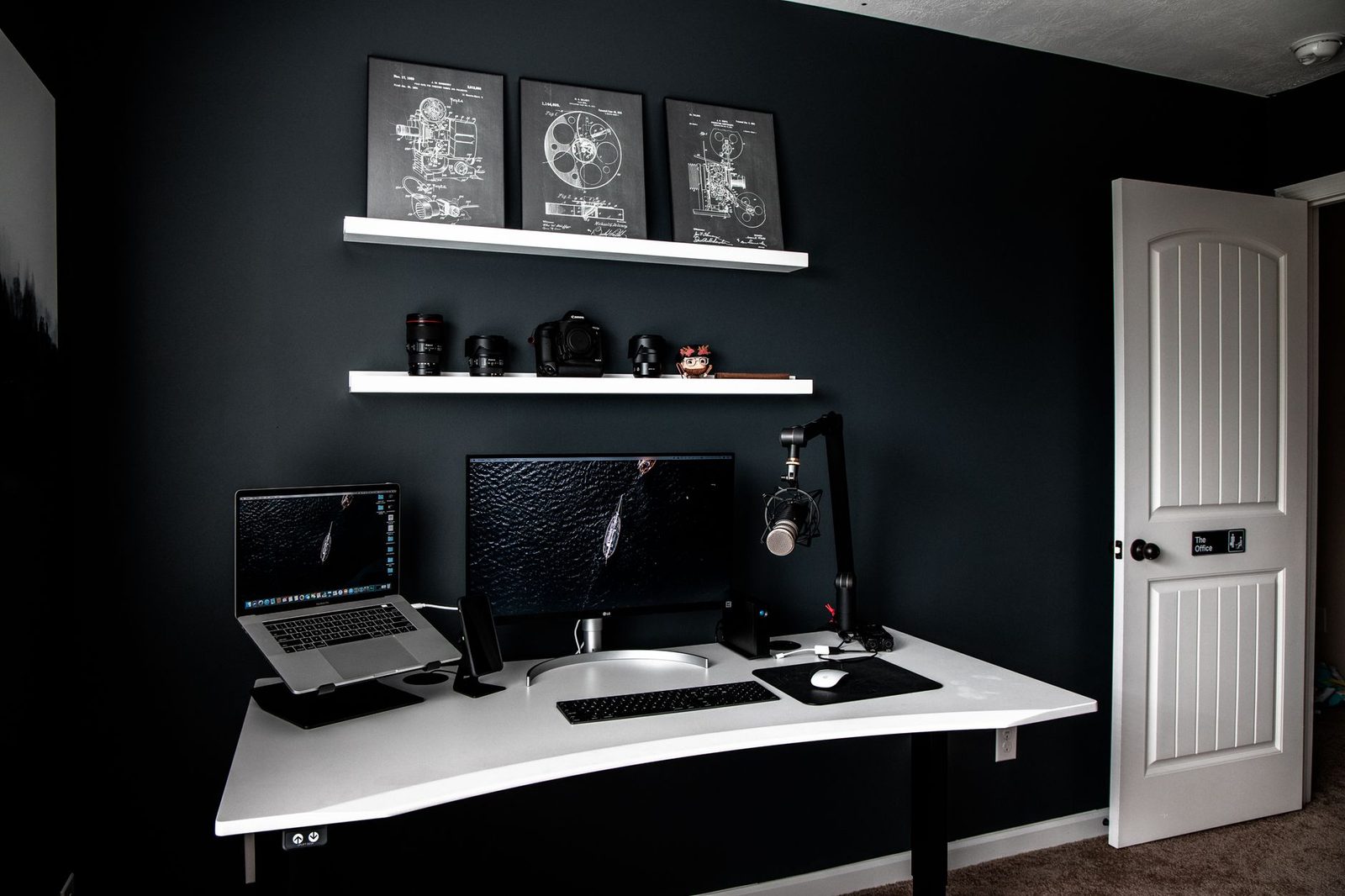
Equipment matters more than you'd think
A successful seven-minute conversation tolerates zero technical friction. Three things make a disproportionate difference.
First, sound. Caregivers often speak in a low voice so as not to wake their relative, in a room where the TV may still be on. A USB headset with noise reduction solves this better than any software setting: the other person hears a whisper distinctly, and you can hear them without turning up the volume.
Then, light. At 11 p.m., a living room is lit in yellow, raking light: the face disappears, the image turns grainy, and people "next" an unreadable face faster. A small LED ring light placed behind the screen, set to a low, warm intensity, is more than enough. You want light that doesn't assault the eyes, not a TV studio.
Finally, posture. Sitting upright at a desk after fourteen hours on your feet is unrealistic. Many caregivers use an adjustable laptop stand on a coffee table or on their lap, which raises the camera to eye level — a trivial detail that completely changes the perceived quality of the exchange, as every video-conferencing guide points out.
Discreet listening, a specific constraint
Caregivers have to stay reachable: to hear a call, the sound of a fall, a bell. Wearing closed-back headphones that shut out the world entirely is therefore off-limits during periods of vigilance. Open bone-conduction earphones leave the ears free while still letting you hear the other person — a solution used by many people who need to monitor their surroundings while listening to something.
Ten minutes, timer included
The practice tips into a problem when it overflows. The rule of thumb that works is simple: decide before opening the window how much time you're giving yourself, and stick to it. Some people put their phone out of reach and use a mechanical kitchen timer, whose ticking quietly reminds them that the break has an end. It sounds laughable; in practice it's the only reliable safeguard against the session that stretches to 2 a.m. and wrecks what little sleep is available.
The pitfalls, plainly stated
The one-sided confession trap
A kind stranger, an evening of deep exhaustion, and out it all comes: the diagnosis, the guilt, the anger at absent siblings. In the moment, it's a genuine relief. The next day, an uncomfortable sense of overexposure lingers — and sometimes the feeling of having betrayed the privacy of the sick relative, who never agreed to have their story passed around.
Simple rule: talk about yourself, yes; recount someone else's illness in detail, no. That story isn't yours to hand out.
The substitution trap
The warning sign isn't the number of minutes, it's what the practice replaces. If sessions take the place of a call to a friend, a request for help from the département, an appointment with the doctor, the tool has become an anesthetic. It relieves the pain without treating the cause, and it lets you hold out a little longer in a situation that should be sounding alarms.
The environment trap
A chatroulette site remains a rough space. You'll run into unpleasant behavior, exhibitionists, wasted minutes. An exhausted caregiver absorbs that less well than a well-rested user. Two minimum protections: never show the relative or the room they're in — blurring or a neutral background if the platform allows it — and disconnect immediately without trying to understand.
The sleep trap
Screen light in the evening delays falling asleep, as the Institut national du sommeil et de la vigilance regularly points out. For someone whose sleep is already fragmented by a relative's nighttime wake-ups, a session at midnight can cost more than it gives back. A notebook kept beside the bed, to empty your head instead of opening a screen, remains a serious substitute on nights when fatigue dominates.
A realistic user's guide
For those who want to try it without having it backfire:
- Pick the right moment. After your relative has gone to bed, not before a care task. Never when tension is at its peak.
- Set a duration. Ten minutes, or five conversations, whatever the criterion, as long as it's set in advance.
- State the constraint up front. "I've got ten minutes, I might have to cut out abruptly" defuses any awkwardness and speeds up getting to the point.
- Look for lightness, not therapy. The benefit comes from aimless chatter, not from pouring your heart out.
- Build nothing. No promise to reconnect, no expectations. The value is in the moment, exactly like the tidiness of a cleaned-up room: it doesn't last, and that's fine.
- Reassess after two weeks. Am I sleeping less? Am I putting off practical steps? If so, stop.
What it says, underneath it all
The existence of this practice says most of all about the void it fills. That you'd have to go through a random chat site to recover ten minutes of ordinary human banality points to a collective failure to organize support around caregivers: a lack of short, flexible respite options, internalized guilt about asking for help, the invisibility of the role.
Random video chat fixes none of that. It's a patch, and it only holds if you apply it in the right place: on boredom, on the silence of 11 p.m., on the urge to laugh for two minutes — not on burnout, which calls for a doctor, a respite scheme and, often, a difficult conversation with the family.
But as long as you keep that in mind, there's something healthy about opening a window onto the world, landing on some guy showing off his cat, laughing, and closing it again. For seven minutes, you weren't anybody's caregiver. It isn't much. It's already a great deal.