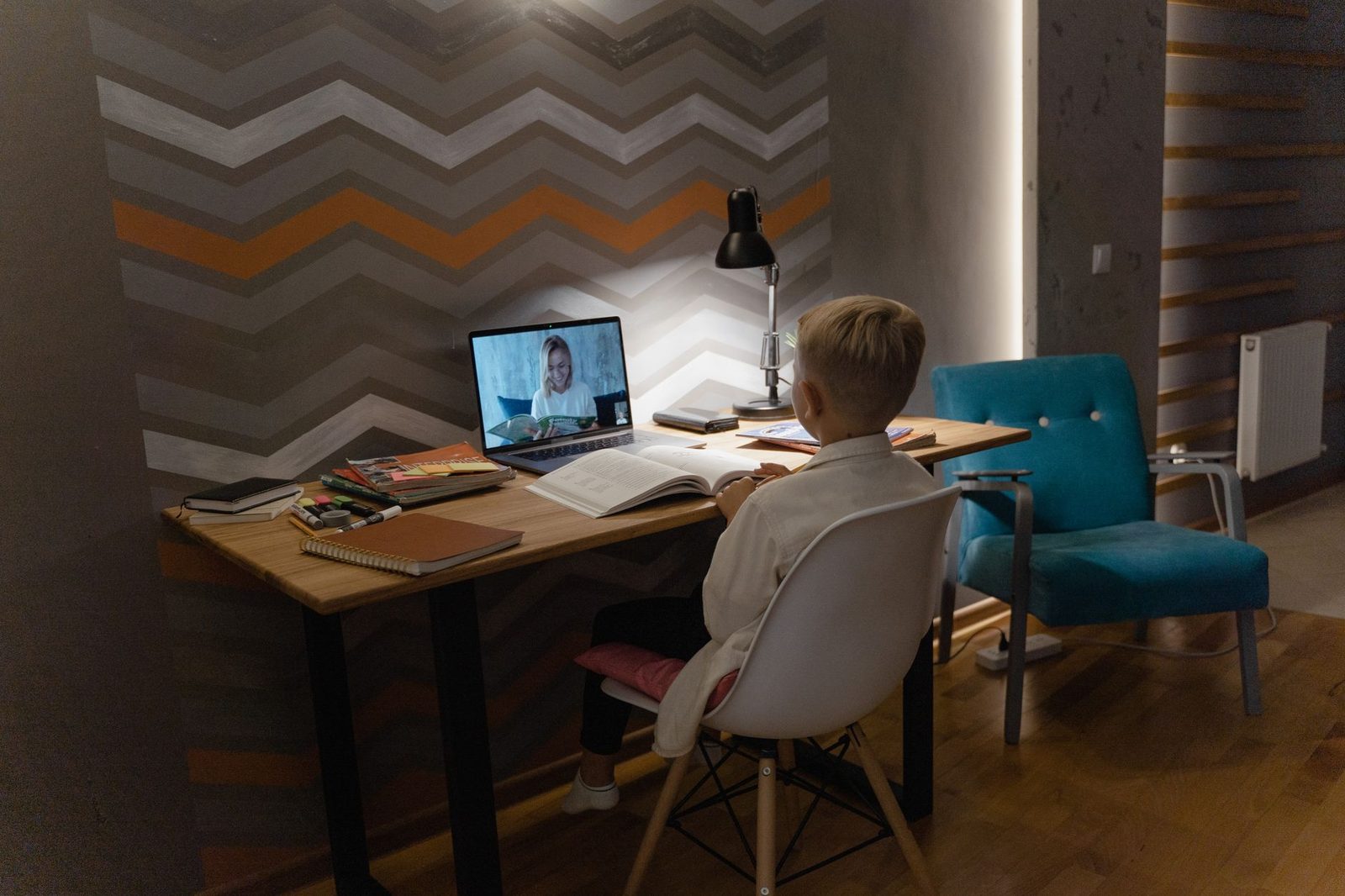
There's a moment nearly every expat describes in the same words. It isn't the arrival, or the paperwork, or the first argument with a landlord in a language you barely control. It's an ordinary evening, in the third or fourth month, when you realize you haven't spoken a single sentence in your mother tongue for two weeks. Not a joke, not a swear word, not even a throwaway "well, there you go." Nothing.
According to the French Ministry for Europe and Foreign Affairs, more than 1.7 million French citizens are listed on the register of French nationals living abroad — and the real total is estimated at between 2.5 and 3 million, since many never register at all. Exchange students, posted employees, trailing spouses, retirees settled in Portugal or Morocco, young professionals who moved to Berlin, Montreal or Dubai. They all share an experience that relocation brochures rarely mention: the mental load of living in a foreign language all day long.
Random video chat occupies an unexpected place here. Not for flirting, not out of boredom: simply because at 11 p.m. in Singapore, when your family is asleep back home and your local colleagues aren't friends, there's a place where, in thirty seconds, you can land on someone who speaks your language. This article describes that use without romanticizing it, and points out the exact moment it stops helping.
Language fatigue: an exhaustion no one names
Speaking a foreign language costs energy
Psycholinguistic research on the cognitive cost of bilingualism points in the same direction: expressing yourself in a second language draws on more attentional resources, particularly for inhibiting the dominant language and for executive control. In practical terms, a two-hour meeting in English is more tiring than a two-hour meeting in your native language, content being equal.
This fatigue is invisible because it doesn't feel like fatigue. It feels like end-of-day irritability, a craving for silence, that strange sense of being less funny, less nuanced, less yourself than you are back home. Plenty of expats put it this way: "In English, I have the personality of a third-grader."
Homesickness isn't touristic nostalgia
The classic models of culture shock — popularized from the 1960s onward by anthropologist Kalervo Oberg's work — describe a U-shaped curve: initial euphoria, a marked dip after a few months, then gradual adjustment. That dip isn't about missing croissants. It's a cluster of micro-deprivations:
- no longer getting the jokes, the TV references, the implications;
- no longer being seen as funny or well-read, for lack of vocabulary;
- having to explain things that, back home, went without saying;
- losing your network of weak ties — the neighbor, the corner-shop owner, the colleague you bump into at the coffee machine.
As far back as 1973, sociologist Mark Granovetter demonstrated how important these "weak ties" are to a person's social fabric. Moving abroad wipes them out overnight, and they're the slowest to rebuild.
Why random video chat answers this specific need
Access to your language without social obligation
Calling your mother means speaking your own language — but it also means reassuring her, giving updates, steering clear of topics that worry her. Joining an expat Facebook group means speaking your own language — but it also means entering a micro-community with its hierarchies and its regulars.
Random video chat offers something else: a conversation with no history and no follow-up. You land on someone in Lyon, Casablanca, Brussels or Abidjan, you talk about nothing for eight minutes, and it's over. No relational debt, no status to maintain. For a brain saturated with constant translation, those eight minutes work like going back to breathing through your nose after an hour of running.
The time-zone problem, again
The time difference is the number one obstacle to keeping ties alive. When you live in Tokyo, home wakes up just as you're going to bed. Friends reply twelve hours later, WhatsApp threads turn into alternating monologues. Random video chat sidesteps this because it depends on no one's calendar: the French-speaking world spans enough time zones (Europe, West Africa, North Africa, Quebec, Réunion, New Caledonia) that someone is almost always awake.
"It wasn't the conversation that did me good, it was laughing at something without having to think about how to say it."
A gentle exposure to the local language, too
The reverse use exists and is underrated. An expat who has just arrived in Spain or Germany can use the geographic filter to practice speaking the local language in a zero-stakes setting: if the conversation flops, you move on to the next person and no one will ever know. No evening class offers this level of spontaneous exposure to real spoken language — with its hesitations, its regional accents, its colloquialisms.
To get the most out of these sessions, many people keep a spiral-bound vocabulary notebook next to the keyboard, jotting down afterward the three or four expressions they heard and had never come across in class. It's a low-tech method, but it has one advantage: the word is tied to a face and a context, which anchors it far better than a list ever could.

What it doesn't replace
Let's be clear, because honesty serves the reader better than a promise.
Random video chat doesn't build a local network. It won't find you a squash partner in Dublin, or a doctor who speaks your language, or someone to help you move apartments. Those are needs rooted in geography, and they get solved on the ground: clubs and associations, team sports, language classes, neighbors, colleagues.
It doesn't treat depression. The third-month dip is normal; a low that lasts more than a few weeks, with sleep problems, loss of appetite and general disengagement, calls for medical advice. Santé publique France regularly points out that social isolation is a documented mental-health risk factor. Most consulates keep a list of professionals who speak your language; telehealth services also make it possible to consult a practitioner from your home country while abroad.
It doesn't replace strong ties. An hour-long call with a long-time friend, where you can say things out of order, has no random equivalent.
What random video chat does well is fill one precise gap: the immediate need for language and human presence, at an hour when nothing else is available.
Using this tool wisely when you live far away
Set a window, not an open-ended session
The classic mistake is opening the site "for five minutes" and shutting the laptop two hours later, emptier than when you started. The mechanism is well known: variable reward — you never know whether the next person will be interesting — keeps the scrolling going, exactly like social media.
One simple rule works for a lot of people: three good conversations, then you close it. Not three hours, not thirty "nexts." Three exchanges where something actually happened. A mechanical kitchen timer sitting next to the screen works better than an alarm on your phone, because it doesn't require unlocking a device that competes for your attention too.
Get the physical setup right
A conversation that keeps cutting out, tinny sound, a face in the dark: the other person moves on. In an expat apartment often furnished in a hurry, two things change everything.
The first is sound. A laptop's built-in mic picks up the echo of an empty room and the noise from the street. A USB headset with noise reduction costs about as much as dinner out and instantly eliminates half the "what?"s that kill conversations.
The second is light. Apartments rented sight unseen rarely have good lighting, and many expats log on in the evening. A small dimmable LED lamp placed behind the screen and aimed at your face gives an infinitely warmer result than a ceiling light. This isn't vanity: a readable face is a face people respond to.
Three openers that work when you're far from home
Living abroad is, in itself, an excellent conversation topic. It intrigues people, it opens up questions, it escapes small talk.
| Situation | What works | What fails |
|---|---|---|
| You want to speak your own language | "Hey! I live in Seoul, I haven't spoken French in two weeks, you're doing me a favor right now" | "Hi" on its own, with no context |
| You're testing out the local language | Say it upfront: "I'm a beginner, correct me" | Pretending to be fluent and then freezing up |
| You want a real exchange | Ask for something concrete: "What's the weather like where you are?", "What city are you in?" | Firing off one identity question after another |
Stating the need explicitly — "I just want to speak my language for five minutes" — immediately defuses any ambiguity and attracts people who want to chat rather than size you up.
Things to watch out for when you live abroad
Safety doesn't travel with you automatically
The basic rules stay the same everywhere: no employer's name, no address, no specific neighborhood, no ID or residence permit visible on screen. One detail matters more when you're abroad: saying that you live alone, that you're new, that you don't know anyone locally, is describing yourself as isolated. It isn't paranoid to keep that information to yourself for the first few minutes.
On the technical side, a sliding webcam cover is worth its trivial price, if only for peace of mind in shared housing or a temporary flatshare. And if you're connecting from a public network — hostel, coworking space, café — it's best to avoid doing anything else sensitive at the same time.
The trap of the mother-tongue bubble
Here's the real risk, and it isn't technical. An expat who spends two hours every evening speaking their own language online is no longer making the painful, necessary effort to go for a drink with local colleagues, join the neighborhood volleyball club, or chat with the baker. The comfort of your mother tongue is an anesthetic: it soothes, but it delays integration.
The test is simple, and worth checking honestly every week:
- Do my sessions add to a local life that already exists?
- Or do they replace outings I end up canceling?
In the first case, it's a release valve. In the second, it's a brake. The difference doesn't show up on screen — it shows up on your calendar.
The comedown after the conversation
Sometimes a warm exchange with someone in Nantes or Geneva leaves you, once the screen goes dark, with a sense of emptiness sharper than before. It's a well-known effect of remote contact: vocal closeness makes physical distance more concrete. If the pattern repeats — logging on to feel better, feeling worse afterward — that's the signal to redirect your energy elsewhere: video-call a friend instead of a stranger, or get out of the apartment.
Some expats get more benefit from keeping a journal of their time abroad in the evening, after the session, turning emotion into narrative rather than letting it loop. It sounds trivial; it's one of the few habits intercultural psychologists recommend with fairly broad consensus.
What you can reasonably expect from it
Random video chat isn't a solution to living abroad. It's a supplementary tool, valuable because of three properties that are hard to find elsewhere: it's immediate, it demands nothing socially in return, and it works at any hour.
Used once or twice a week, for twenty minutes, to hear your own language and remind yourself that you're capable of being funny, it does exactly what you ask of it. Used every evening for two hours as a substitute for a social life, it closes in on you.
Between the two lies a wide, comfortable margin. It deserves to be occupied without guilt: talking to a stranger in your mother tongue, on a Tuesday evening, 11,000 kilometers from home, is no kind of failure. In its own way, it's actually a very ordinary way of holding on.
Sources and resources: ministère de l'Europe et des Affaires étrangères (register of French nationals living abroad), Santé publique France (social isolation and mental health), Kalervo Oberg's work on culture shock, Mark Granovetter, "The Strength of Weak Ties" (1973).