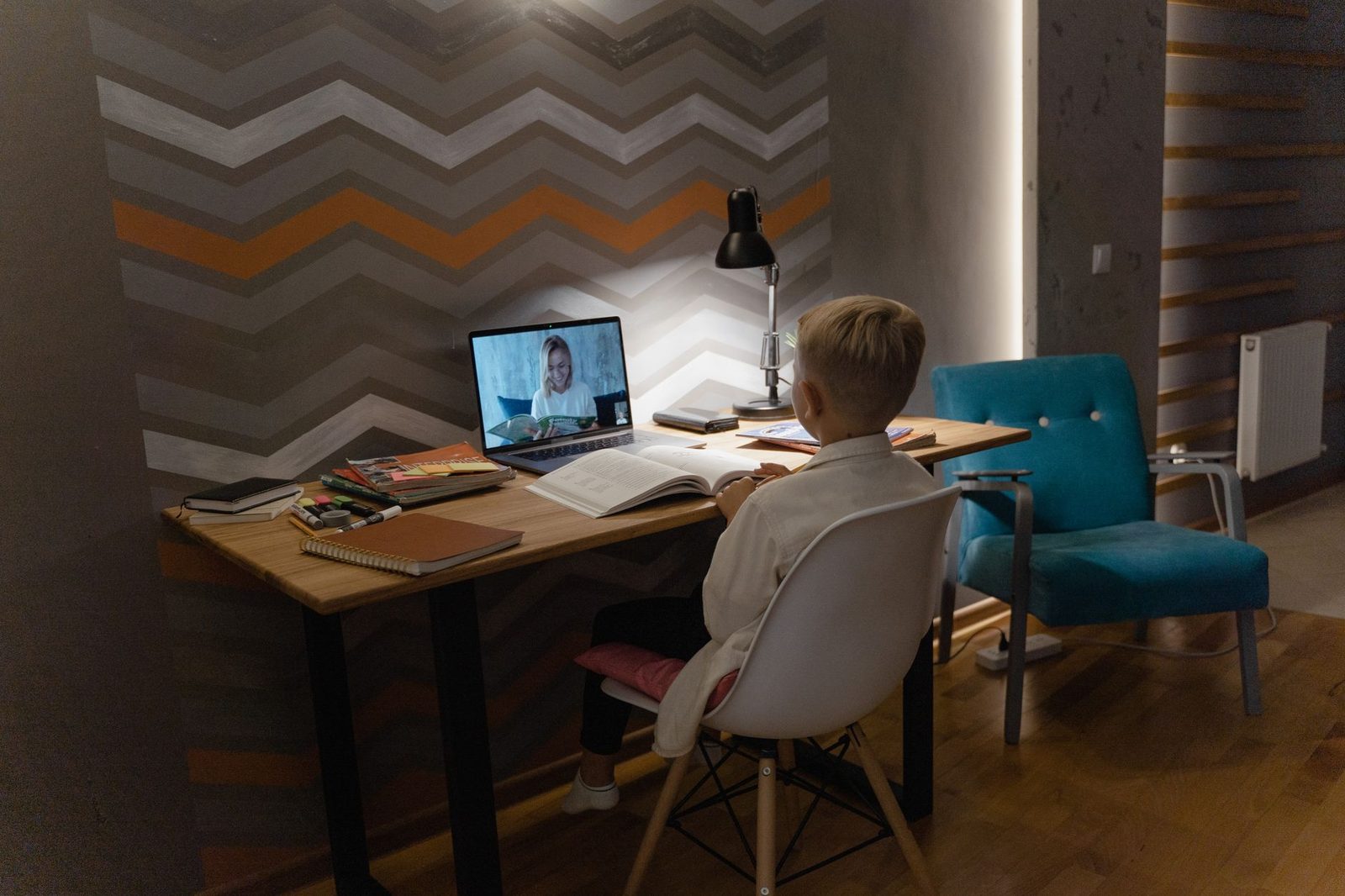
There's one sentence every night worker ends up hearing, and it grates a little more each time: "So when do you actually sleep?" The honest answer would be long. It would cover naps cut short by delivery drivers, blackout blinds that are never quite dark enough, meals at odd hours, one birthday missed out of every three. So you say "it's fine, you get used to it," and the conversation moves on.
According to France's Direction de l'animation de la recherche, des études et des statistiques (DARES), more than 4 million French employees work at night, either routinely or occasionally, and nearly one worker in three has what are called atypical hours — evenings, weekends, rotating shifts. Nurses, care assistants, security guards, lorry drivers, bakers, warehouse staff, on-call technicians, refinery workers. The Institut national de recherche et de sécurité (INRS) has spent years documenting the physiological consequences of this rhythm: chronic sleep debt, digestive problems, increased cardiovascular risk. What the studies mention less often is the most everyday consequence of all: social desynchronisation.
Because the problem isn't just sleeping during the day. It's that collective life — drinks after work, matches, dinners, phone calls to your mother — takes place entirely during your working or sleeping hours. You're not excluded: you're simply eight hours out of step with the rest of the world.
It's in that gap that a quiet use of random video chat has taken root. Not flirting, not boredom: the simple fact that at 4:20 a.m., in a break room or in a car in a company car park, there's somewhere a person is awake and available to talk about nothing in particular. This article describes that use without romanticising it, and points to the exact spot where it turns against you.
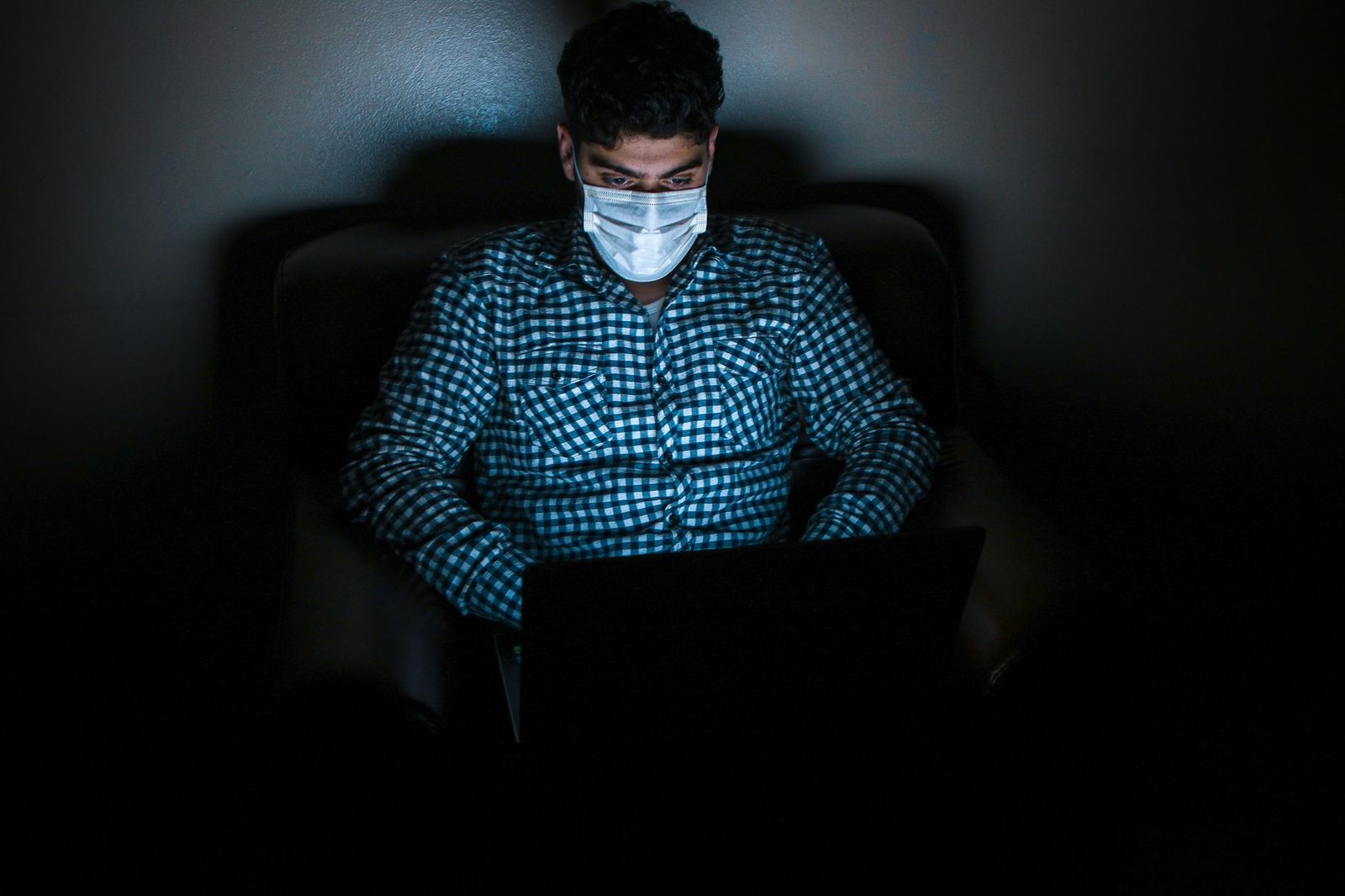
The desynchronised worker isn't alone, they're out of phase
Loneliness on a fixed timetable
Night workers see plenty of people. A lot of them, in fact: colleagues, patients, customers, delivery drivers. Their night can be packed with interactions. But as with other forms of isolation, every one of those interactions has a function. You pass on instructions, you hand over to the next shift, you deal with an incident. What's missing is non-functional time — the kind where nobody wants anything from you.
And it arrives at precisely the worst moment: the 3 a.m. break, or the two floating hours after the shift, when you get home too wired to sleep and too exhausted to do anything useful.
The phone solves nothing at that hour
The obvious option — call someone — runs into a wall of arithmetic. Your friends are asleep. Your family is asleep. Your partner, if they work standard hours, is asleep beside you or has already left. Sending a message at 4 a.m. also creates a small debt: the person will reply at 8 a.m., when you've finally fallen asleep, and the thread will unspool out of sync for three days.
Random video chat sidesteps the problem by its very nature: it asks nobody to make themselves available. It connects people who are already awake, somewhere on the planet. At 4 a.m. in France, it's 11 a.m. in Hanoi, 10 p.m. in Montreal, 5 a.m. in Moscow. The French night is the middle of someone else's day.
The paradox of shift work: you're not isolated from the world, you're isolated from your own social time zone. Random video chat doesn't fill a human void — it corrects a time difference.
What the night actually changes about these exchanges
A different population, a different tone
Anyone who has tried both will tell you: a session at 9 p.m. and a session at 4 a.m. have nothing in common. The dead of night filters things naturally. What's left are insomniacs, students cramming, people in another time zone, other shift workers, and night owls heading home from a party. The pace is slower. People "next" less quickly. Conversations drift more easily onto personal subjects — what social psychology has long called the online disinhibition effect, described by psychologist John Suler back in 2004 — amplified here by fatigue, which lowers your defences even further.
That's both the appeal and the risk of these hours. You open up more easily at 4 a.m. than at 6 p.m. Sometimes it's liberating. Sometimes you tell a stranger things you regret saying the next day.
The question of setting and lighting
In a break room under fluorescent lights, or in a bedroom plunged into darkness with nothing but the glow of the screen, you almost always look bad. Flattened face, hollowed-out shadows under the eyes, greenish complexion. This isn't vanity: an unreadable image makes exchanges shorter, quite simply because the other person can't make out your expressions.
A small dimmable LED lamp placed beside the screen, aimed at your face rather than at the lens, transforms the result — and costs about as much as two sandwiches. Set to a warm, low light, it has a second advantage, detailed further down: it exposes you less to the wavelengths that delay falling asleep.
Sound, the night worker's number one enemy
Two constraints stack up at that hour. First, you often have to keep your voice down: colleagues on break, neighbours across the landing, a partner asleep in the next room. Second, night-time work environments are rarely quiet — ventilation, machinery, a service radio, traffic in a car park.
A noise-cancelling headset with a microphone solves both problems at once: it isolates what you hear and focuses what you transmit, which lets you speak barely above a whisper while staying perfectly audible. It's probably the single purchase that improves a night-time session the most, far ahead of a webcam.
The uses that genuinely work at these hours
Speaking your own language, or practising another
Many shift workers use these sessions as a linguistic bubble: speaking French to someone who is neither a colleague nor a patient. Others do the opposite and take advantage of the time difference to land on English, Spanish or Portuguese speakers in the middle of their own day — a practice window that evening classes will never offer to someone who works evenings.
A small pocket notebook left near your workstation, used to jot down three expressions you've heard, is enough to turn a rambling session into real practice. Without it, everything fades by bedtime.
Decompressing after a hard night
In care or security work, some nights leave a mark. Institutional debriefing rarely exists at 6 a.m. Talking for ten minutes to a stranger who knows nothing about the case, who won't judge, and whom you'll never run into again works for many people as an airlock. It's a use worth recognising for what it is: a release valve, not treatment. In the face of serious situations, the psychological support units in your organisation and services such as 3114 (France's national suicide prevention line) exist and remain the right door to knock on.
Filling a split-shift gap instead of enduring it
Split shifts — two stints separated by three dead hours — are a French specialty, particularly loathed by workers in hospitality, cleaning and transport. Five or six three-minute exchanges fill that hole far better than passively scrolling social media, because they demand active attention and leave behind the trace of a real conversation.
The real danger: light, stimulation, and the hour slipping away
This is the heart of the article, and the part you shouldn't skip.
What chronobiology says
Exposure to light, particularly at short wavelengths (blue), at the end of your waking period delays melatonin secretion and shifts your internal clock. The Institut national du sommeil et de la vigilance (INSV) and the INRS recommend the opposite strategy for shift workers: bright light during the shift to maintain alertness, then darkness and dim light in the two hours before going to bed — even if that bedtime falls at 8 a.m.
Now, a video chat session is exactly the reverse: a bright screen 50 cm from your face, stimulating social interaction, a dose of the unexpected with every new person. In other words, a wake-up signal administered precisely when you should be sending a sleep signal.
The two-hour rule
The simplest rule, and the only one that holds up over time:
| Moment | Random video chat | Why |
|---|---|---|
| Break mid-shift | Recommended | Maintains alertness, breaks the monotony |
| End of shift, commute, arrival home | Acceptable | Decompression airlock before bed |
| Two hours before bed | Avoid | Delays falling asleep by 30 to 60 min |
| In bed, screen in hand | Never | Associates the bed with wakefulness, breaks the conditioning |
The last row is the most important. Behavioural therapy protocols for insomnia, referenced by France's Haute Autorité de santé, rest largely on stimulus control: the bed should be used only for sleep. A video chat session under the duvet is the most efficient way to sabotage that principle.
Three concrete safeguards
- Set an end alarm, not a start alarm. Set a timer for 20 or 25 minutes before launching the first session. Without a stopping point, it's suddenly 7:40 a.m. and you have no idea how.
- The last fifteen minutes, screen-free. Curtains drawn, amber light, no devices. A blackout sleep mask and foam earplugs will do more for your daytime recovery than any app.
- No sessions after the shower. An arbitrary physical boundary, but one that works better than any resolution based on the clock: once the shower is done, the night is over.
Safety: what holds true at 4 a.m. just as it does at noon
Fatigue lowers vigilance and judgement. That's documented in night-time workplace accidents, and it applies online too. A few reflexes, offered without moralising:
- Never let your workplace be identifiable on camera. A badge, a logo on a tunic, a recognisable break-room background: that's enough to pinpoint your location, and it can expose you professionally. A sliding webcam cover also prevents a camera left running while you step away.
- Nothing identifying, ever. No employer name, no schedule, no neighbourhood. The fact that you're alone at home at known hours is sensitive information.
- No important decisions between 3 a.m. and 6 a.m. No purchases, no messages sent in the heat of emotion, no irreversible confidences. This is the window in which judgement is physiologically at its worst.
- Nothing compromising on camera. Recording is always possible, and fatigue is a poor adviser.
Where this use becomes a problem
Random video chat helps night workers as long as it fills time that would otherwise be empty. It becomes harmful the moment it starts eating into sleep or real social time. Three warning signs:
- You systematically push back bedtime "for one last one."
- You'd rather have a session than a scheduled call with someone close to you on your day off.
- You catch yourself always seeking the same type of exchange, increasingly intense, increasingly unsatisfying.
The remedy is never total abstinence, which doesn't last three weeks. It lies in structure: sessions during the shift rather than after it, a bounded duration, and one genuine social anchor point in the week — a lunch, a sport, a weekly call scheduled around other people's hours rather than your own.
The best possible use
A care assistant summed it up like this: "At night, there are ten minutes where you're no longer useful to anyone. It's the only moment of the day when I can talk to someone who wants nothing from me."
That's probably the most accurate definition of what these platforms offer the desynchronised. Not dates, not a substitute social life: a point of contact with the waking world, at the precise moment when the world you know is asleep. Used at the right hour, kept within limits and closed before bed, it's an honest tool. Used at 7:30 a.m. in the dark, with an unmade bed and a screen in hand, it's just more sleep debt.
The difference between the two comes down to twenty minutes and a lamp.