You've been told everything about your face. Front-facing light, webcam at eye level, background cleared of the laundry drying in the corner, a smile within the first two seconds. Nobody has mentioned your hands — and yet, in a standard webcam frame, they often take up as much surface area as your head.
Random video chat is a medium of the upper body. The frame rarely extends below the chest, and that is precisely the zone where hands circulate: they move through the image, they leave it, they come back to rest on the desk, they rise toward the face. They move far more than a face does, and the human eye is wired to follow movement.
The result: the stranger across from you is judging you partly through a channel you don't control, because you don't even know it's switched on. This article takes that channel seriously: why gesture is read before speech, which gestures drive people away, which ones hold their attention, what framing and latency do to your hands, and how to practise without turning into a home-shopping robot.
Why gesture arrives before words
Psycholinguists have long talked about co-verbality: speech and gesture aren't two separate channels but two outputs of a single system. The work of American linguist David McNeill, a landmark in the field, showed that gesture frequently precedes the word it accompanies by anywhere from a few tens to a few hundred milliseconds. We sketch before we speak.
In face-to-face conversation, that gap is invisible: everything arrives at once at shoulder height. In random video chat, it becomes structural, for two reasons.
The first is the decision window. Cam-to-cam sessions play out over a handful of seconds: the stranger decides whether to stay or skip before your first full sentence is finished. During that interval, they have almost nothing to analyse — a face frozen in surprise, a background, and hands. Gesture is the only thing moving, and therefore the only thing conveying information.
The second is latency. Even on a good connection, audio and video don't arrive in perfect sync, and the audio often runs slightly ahead of or behind the picture. A clean, decisive gesture — one that starts and stops — survives that desynchronisation. A vague, continuous, cluttered gesture becomes visual noise.
In cam-to-cam, your hands don't complete your speech: they precede it. They tell the stranger what kind of conversation is coming.
The four gestures that trigger the "next"
There is obviously no study dedicated specifically to random video chat on this point. But cross-referencing what we know about non-verbal communication with what regular users describe, four families of gestures come up again and again on the side of aborted conversations.
The covering hand. Hand in front of the mouth, fingers on the lips, fist under the chin creeping up until it masks the lower half of the face. This is the self-protection gesture par excellence, and it reads as withdrawal. The stranger doesn't think "this person is shy", they feel "this person doesn't want to be here".
Fidgeting. Headphone cord wrapped around a finger, a pen spinning, a lock of hair, a nail being picked at. These repetitive micro-movements, which psychologists call self-touch gestures, are perfectly normal stress regulators. The problem is their frequency in a tight frame: they saturate the image.
The out-of-frame gesture. Talking with sweeping movements of which only the entrance and exit from the frame are visible. Your partner sees forearms appearing and disappearing without ever seeing the shape of the gesture. The effect is disorienting, sometimes almost aggressive.
The invisible hand. Conversely, hands entirely absent from the frame, resting on your thighs or under the desk. The torso becomes static, and in a feed where everyone is skipping, stillness looks like a frozen image — or a dead stream. Several users report being "nexted" because the other person thought they'd landed on an abandoned webcam.
| Gesture | What you think you're conveying | What's actually perceived |
|---|---|---|
| Hand over the mouth | Thoughtfulness, reserve | Refusal to engage |
| Fidgeting with an object | Nothing, it's automatic | Nervousness, distraction |
| Big out-of-frame gestures | Enthusiasm | Illegible agitation |
| Hands absent | Calm | Frozen stream, disinterest |
The gestures that hold attention
The good news is that the reverse works too — and very fast. Three gestures are enough to tip the first second in your favour.
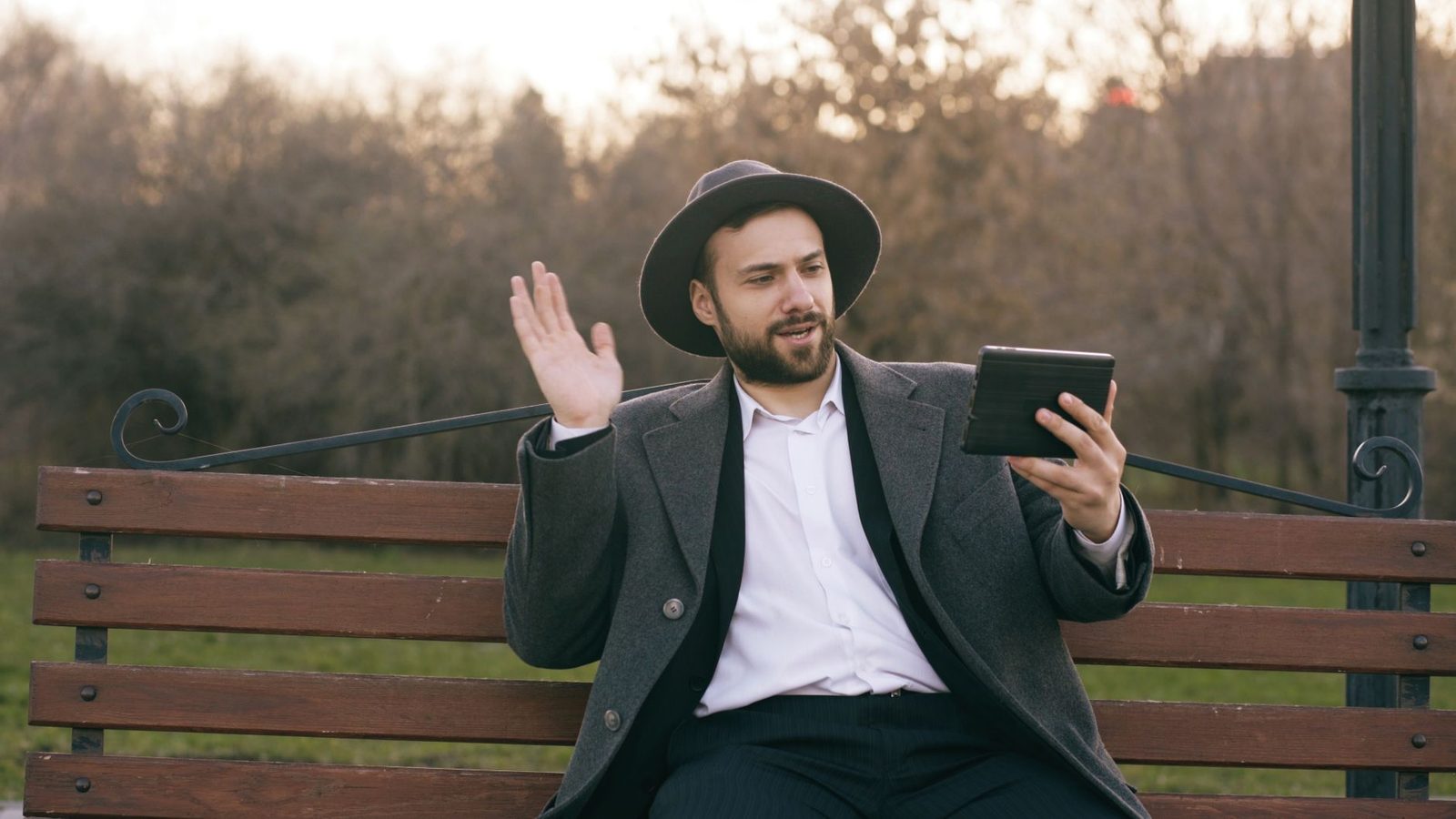
The clear wave. Open hand, palm visible, at shoulder height, one or two passes, then the hand comes back down. The open palm is one of the few non-verbal signals with near-universal legibility: it shows you're hiding nothing. In a context where the stranger's main fear is an unpleasant surprise, that's an instant argument for trust.
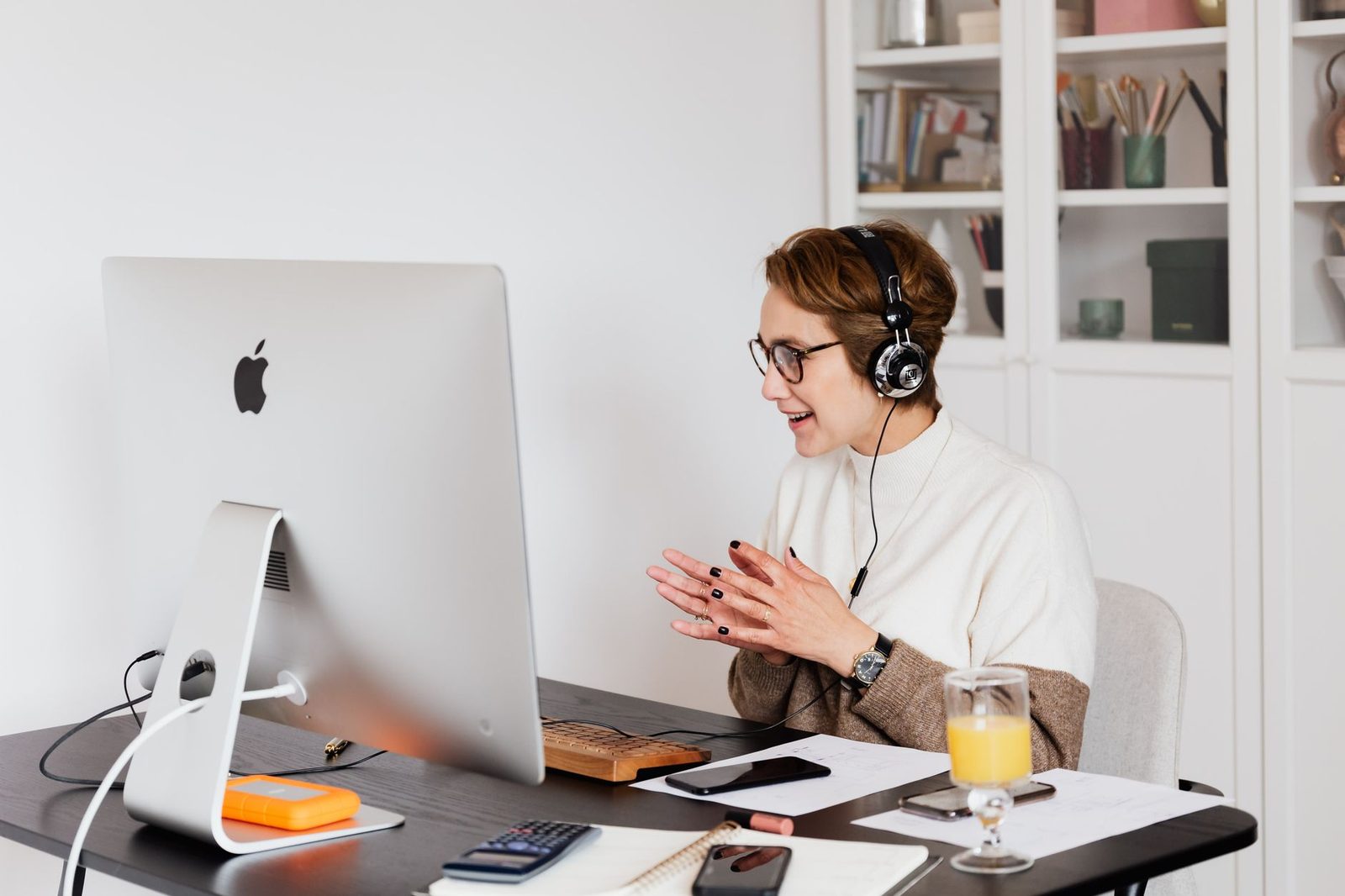
The illustrative gesture. Showing the size of something, tracing a direction in the air, counting on your fingers. These gestures don't just decorate speech: they make it comprehensible when the language is shaky. It's the central tool in exchanges where neither party speaks the other's language well.
The show-and-tell gesture. Bringing something close to the camera — a book, a mug, an instrument, a drawing — shifts attention from your face to shared content. It's devastatingly effective because it transforms the stranger's gaze: they're no longer assessing a person, they're looking at a thing.
That's precisely why keeping a small sketchbook, a deck of cards or some slightly unusual object within reach changes the dynamic of an entire session. The act of reaching for something and holding it up creates natural movement, without theatrics.
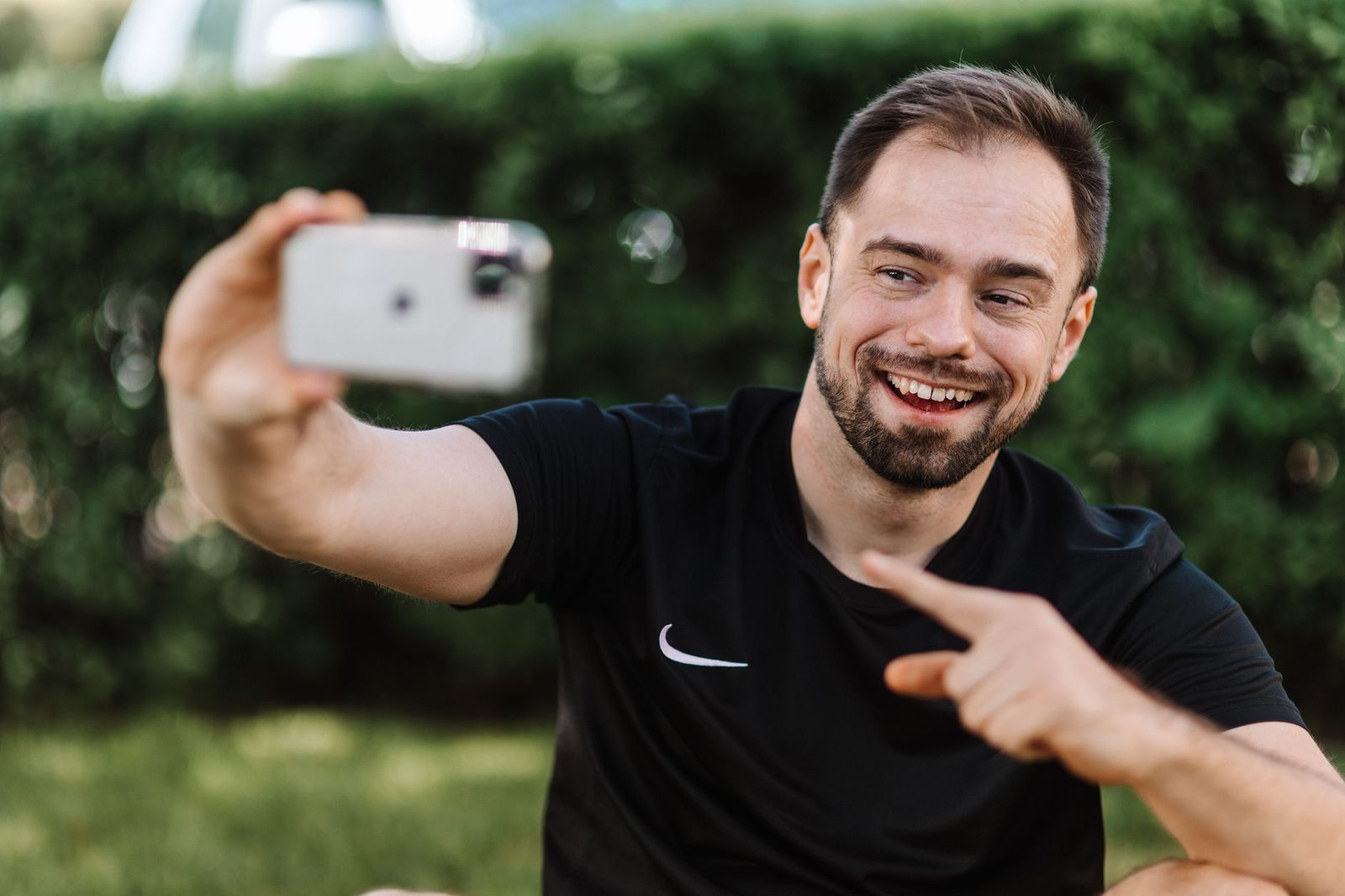
Framing determines what your hands are allowed to say
You can't gesture properly in a bad frame. And the default framing of most setups is bad for hands.
The problem with a laptop sitting flat
A laptop on a desk films from a slight low angle, through a wide-angle lens. Two consequences: your hands become enormous and distorted as they approach the keyboard, and when they rise, they exit the frame at the bottom and then reappear abruptly.
Raising the machine by four to six inches fixes most of it. An adjustable laptop stand does the job, with the side benefit of freeing up desk space — and therefore a clean area to rest your hands.
The lower-third rule
Aim for a frame where the bottom of the image cuts across the middle of your torso, not just under your chin. Your hands need to be able to rise to chest height and stay visible. A good test: raise both hands as if you were holding a ball in front of you. If you can't see them in full in the preview, back up eight inches or tilt the camera.
If you use an external webcam, a model with genuine angle adjustment and a stable clamp beats a very high-resolution sensor that's badly positioned. An HD webcam with an adjustable tripod gives you exactly that few-inch shift that changes everything.
Lighting your hands
Hands sit in front of the body: they therefore enter the brightest zone and cast shadows on your face when light comes from a single point. Overly directional lighting turns every gesture into a torch beam. A diffuse lamp placed slightly off to the side, or two weak sources instead of one strong one, solves the problem. A small LED panel with a diffuser is more than enough for desk use.
What fatigue does to your gestures
Gesture is one of the first signals to degrade when sessions pile up. After forty minutes of random video chat, the repertoire shrinks: the wave survives, the illustrative gestures disappear, and self-touch gestures increase.
This isn't moral weariness, it's cognitive load. Research on videoconference fatigue — notably the work of Jeremy Bailenson at Stanford University, who formalised the notion of Zoom fatigue — explicitly identifies reduced mobility and the constant monitoring of one's own image as two drivers of exhaustion. Random video chat adds another layer: the relentless turnover of conversation partners.
In practice:
- Beyond thirty to forty minutes, take a five-minute break, standing up, hands included.
- Hide your own self-view if the platform allows it. Watching yourself gesture inhibits spontaneous gesture.
- Don't hold your phone in your hand during a long session: the arm locks up and gestures die. An articulated phone stand frees up both hands.
- Drink water. Dehydration affects the voice, and a constrained voice produces a constrained body.
Hands in cross-cultural exchanges
A point French-language guides tend to neglect: the same gesture doesn't mean the same thing everywhere, and random video chat connects people from every continent within minutes.
A few examples widely documented in the anthropology of communication:
- The thumbs-up, unremarkable in France, remains negatively charged in parts of the Middle East and West Africa.
- The thumb-and-index circle meaning "perfect" in French is an insult in Brazil and in several Latin American countries.
- The "come here" sign with palm up and index finger curling is considered very rude in several Southeast Asian countries, where beckoning is done palm down.
- Pointing at someone with your index finger is seen as aggressive across much of Asia and Africa.
The safe rule is simple: when opening an exchange with a stranger whose origin you don't know, stick to the open palm, the nod, and gestures that describe objects or shapes. Cultural emblems — the ones that stand in for a word — should be saved for once the conversation is established.
For anyone who regularly video chats with people abroad, a guide to intercultural communication sheds light on plenty of misunderstandings that were wrongly chalked up to coldness or aggression.
A ten-minute drill, three times over
You don't learn to gesture well by thinking about it mid-conversation — that's the surest way to go stiff. You learn it beforehand, in short sets.
Session 1 — the frame. Open your camera app, with no one on the other end. Talk about your day for two minutes while forcing your hands up into the frame. Spot the moments they leave the shot. Adjust the height and angle. Start again.
Session 2 — the repertoire. Describe out loud, facing the camera, three objects in the room: their size, their shape, their position. The goal: never say an adjective of dimension without pairing it with a gesture. It's the foundational exercise of public-speaking training, and it transfers perfectly to cam-to-cam.
Session 3 — the opening. Drill the same three-second sequence ten times in a row: look at the camera, open-palm wave, short first sentence, hands coming back down to rest. Ten times. That sequence will become automatic, and that's exactly the point: it frees up your attention to listen to the other person.
If you want to go deeper, a serious book on non-verbal communication — written by a researcher rather than a salesman peddling "lie detection" — will spare you the popular misreadings along the lines of "crossed arms means closed off", which don't hold up under scrutiny.
The takeaway
Hands aren't an accessory in random video chat: in a frame that stops at the torso, they are half of your presence. They arrive before your words, they cope with connection hiccups better than your voice does, and they cross language barriers when nothing else can.
Three decisions are enough to change the game: raise the camera so your hands fit in the frame, replace fidgeting with an object to show, and automate a three-second opening with an open palm. The rest will follow on its own, because spontaneous gesture returns the moment your body stops fearing it will leave the shot.
And if you remember only one thing: a visible hand is always more reassuring than a hidden one. That's been true for a very long time — long before webcams.