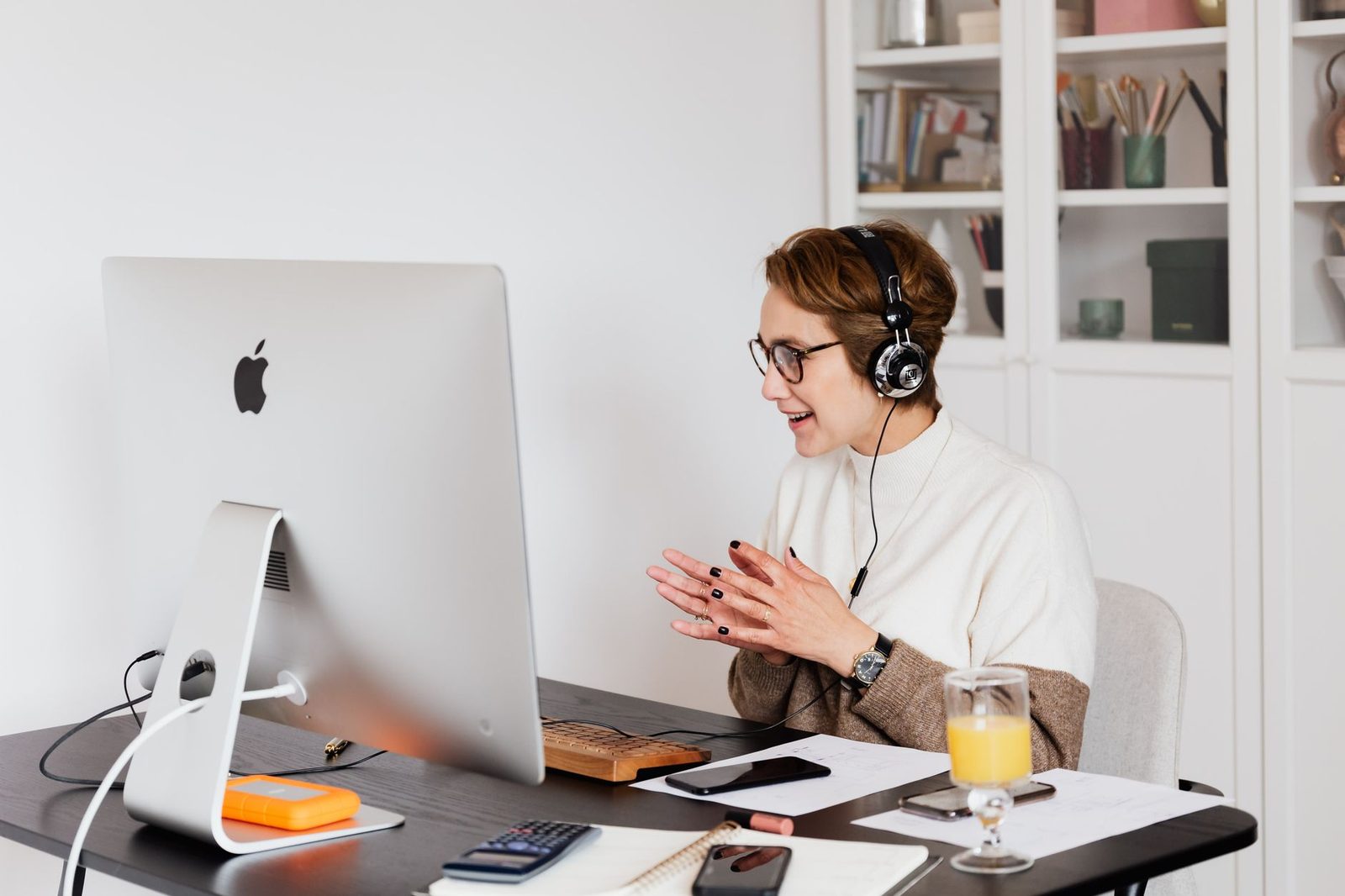
We always picture chatroulette as a solitary affair: one person, one webcam, a lamp and a lot of silence. The reality is far more social than that. A good share of sessions happen in pairs — a friend sprawled on the sofa nearby, a flatmate chiming in, a couple trying the experience together. And that setup changes absolutely everything: the rhythm, the humour, how long conversations last, even the kind of people willing to stick around.
This isn't a trivial detail. A second body in the frame alters the social mechanics from start to finish. It removes much of the initial anxiety, but it introduces other hazards: the "audience" effect, inside jokes nobody else can follow, the stranger who feels outnumbered. This guide breaks down what works as a duo, what fails, and how to get the most out of a setup that's rarely documented.

Why a duo defuses the anxiety of the first click
The social cost is shared
The number one obstacle in random video chat is the moment the screen lights up and you have to say something. Alone, everything rests on you: if the stranger skips to the next person within a second, it's you who has been "rejected". With two of you, that cost is diluted. Rejection becomes a collective event, therefore trivial — and often funny.
Since the work of Bibb Latané and John Darley in the 1960s and 1970s, social psychologists have spoken of diffusion of responsibility: the more people involved in a situation, the less personally accountable each one feels. Usually described as a negative phenomenon — the bystander effect — this mechanism works in your favour here. Nobody is solely responsible for the awkward silence.
Laughter is contagious, even on screen
Sophie Scott, a neuroscientist at University College London, has done extensive research on laughter and points out a counter-intuitive fact: we laugh far more in the presence of other people than alone, and laughter is above all a social signal rather than a response to humour. A duo in front of a webcam therefore naturally produces more laughter than a lone user — and that laughter is audible to the stranger, who reads it as a sign of friendliness.
The practical upshot: duo conversations statistically last longer, because there's always sound, movement, life in the frame. The screen never "dies".
You dare things you'd never try alone
The accomplice beside you acts as a safety net. You try a joke, an absurd question, a conversation in shaky English — if there's a lull, the other one picks it up. That safety lets you build confidence faster than going solo, provided you stay alert to one major pitfall we'll cover further down: the temptation to talk to each other rather than to the stranger.
What the person on the other side sees — and feels
This is the point duos systematically forget. From the other side, two faces staring at you and laughing is not a neutral sight. Three possible readings for your counterpart:
| What the duo does | What the stranger understands | Effect |
|---|---|---|
| Looks at the camera, smiles, says hello in two voices | "Two friendly people" | They stay |
| Laughs while looking at each other, whispers | "They're making fun of me" | They skip to the next |
| One person talks, the other sits frozen and disengaged | "There's a silent observer" | Discomfort |
| Stays in the dark, faces poorly lit | "I can't tell who's there" | Instant distrust |
Being outnumbered is a real feeling. The person opposite is alone facing two strangers who clearly share their own codes. If you want the conversation to last, you have to actively compensate.
Simple rule: within the first ten seconds, both people in the duo must have said hello and looked at the lens. A duo that is fifty per cent silent is perceived as a duo that is judging.
The off-camera problem
A voice coming from somewhere you can't see is far more unsettling than a face. If your friend is sitting outside the frame and commenting, the stranger hears someone they cannot identify — the most anxiety-inducing setup there is. Either you both step into the shot, or whoever stays out of frame keeps quiet.
That assumes a camera wide enough to cover two people sitting side by side. Built-in laptop webcams often have too narrow an angle: you end up cheek to cheek, or one of you half cropped out. A wide-angle 1080p webcam solves the problem in a minute and stays useful for everything else — work calls, family video chats.
The four duo setups, and how each one plays out
Not all pairs are equal. Here are the most common configurations and their particular dynamics.
Two friends of the same gender
This is the classic setup, often the funniest, and also the one that slides fastest into an inside-jokes bubble. The risk: the session becomes a moment between the two of you, with the stranger reduced to spectator of a private show. The fix is mechanical — impose an alternating rule: each of you asks every other question to the person opposite.
A mixed-gender duo
Statistically, this is the setup that yields the most long conversations. It's reassuring: a mixed duo reads less like "lads on a night out" and more like "two people having a chat". Strangers of all genders stay noticeably longer.
A couple
A delicate but interesting setup. Plenty of couples try random video chat out of shared curiosity, and it works as long as you make your intentions clear quickly — misunderstandings about what you're after are the leading cause of abrupt endings. State up front that you're just here to talk, nothing more, and you'll avoid 90% of awkward situations.
Groups of three or more
Beyond two, the effect almost always tips the wrong way. Three faces crammed into a badly lit frame with background noise is the universal signal of a boozy party: most users skip on instantly. If there are several of you, appoint two "starters" in front of the screen and keep the others off camera and silent.
The hardware setup: two people, twice the requirements
What just about passed solo becomes unworkable in pairs. Three concrete points.
Sound. Two voices, two distances from the mic, and a laptop microphone that mostly picks up the keyboard: the person opposite will hear nothing but mush. It's the number one technical reason for getting "nexted". A USB microphone placed between the two of you, aimed at the table, evens out levels and removes most of the ambient noise. Failing that, sit closer together and speak a notch quieter than you think you need to.
Audio monitoring. Two people can't share one headset. If you use speakers, the echo loops back into the mic and makes the conversation unintelligible. The simplest solution is a headset with an audio splitter, or two wired earphones plugged into a small dual adapter — that kind of accessory costs a few euros and saves every one of your duo sessions.
Lighting. Lighting one face is easy; lighting two evenly is much less so. A single lamp placed on the right leaves the person on the left in shadow, producing the "someone is hiding" effect. A diffused LED panel placed behind the screen at eye level flattens the shadows and makes both faces equally readable.
The effective duo protocol
Here's a tested method, in five points, that turns a messy session into a genuinely sociable moment.
- The synchronised greeting. Both people say hello within the first three seconds. No "hang on, let me introduce my mate": a two-voice "hi!" is enough.
- The one-sentence intro. "We're two friends in Lyon, giving this a try." That immediately clears up any ambiguity about the nature of the duo.
- The alternating rule. Every other question comes from one of you, then the other. This prevents a two-person monologue and gives the stranger two ways in.
- No side conversations. Everything said in the room is said on screen. A whisper between you is read as mockery, every single time.
- Shared nexting. Decide in advance who hits "next" and on what basis. Nothing is more frustrating than watching your friend cut off a conversation just as it was getting interesting.
The special case of foreign languages
A duo is a godsend for practising a language. Where a solo user gets stuck on a word and collapses, a pair takes turns: one hunts for the vocabulary while the other buys time. A pocket vocabulary notebook placed between you, where each of you jots down the expressions you hear, turns the session into a genuine workshop. It's more effective than typing into a translator mid-conversation — a move that breaks eye contact and drives people away.
Pitfalls specific to the duo
The audience effect
When a friend is watching you talk, you're no longer talking to the stranger: you're performing for your friend. The jokes get broader, the volume rises, the conversation turns into a show. This is the classic audience effect described as far back as 1898 by psychologist Norman Triplett: the presence of observers alters our behaviour by amplifying dominant responses — here, the easy gag.
The symptom is easy to spot: if you're looking at your friend more often than at the camera, you've fallen into it.
One-upmanship and things going too far
In pairs, inhibition drops. That's pleasant for spontaneity, but it's also what pushes some duos into behaviour they'd never engage in alone: provocations, inappropriate remarks, filming the screen. A simple legal reminder: in France, recording or sharing someone's image without their consent can lead to prosecution under Article 226-1 of the Criminal Code, which penalises invasion of privacy. The fact that two of you find it funny changes nothing in the eyes of the law.
Forgetting each other's safety
Alone, you keep an eye on what appears in the background. In pairs, you get distracted and forget the post lying on the table, the local club shirt, the view out of the window. A duo session deserves the same precautions as a solo one: neutral background, no visible documents, no surnames spoken aloud. A foldable green screen — or simply a bare wall behind you — settles the question for good.
When solo is still better
Let's be honest: a duo isn't always the better option.
- For deep conversations. A stranger won't open up in front of two people. The long, personal exchanges that make random video chat worthwhile almost always require a one-to-one.
- For flirting. A friend beside you is the surest way to kill any romantic tension. Nobody flirts in front of an audience.
- For building confidence. If your goal is to overcome shyness, the duo is a comfortable crutch that stops you doing the actual work.
The right approach is alternation: duo sessions for fun, discovery and laughs; solo for anything that requires intimacy.
In summary
Chatting in pairs on chatroulette is a widespread and largely underestimated practice. Done well, it makes the experience warmer, funnier and far less nerve-wracking. Done badly, it produces exactly the opposite of what you're after: a closed circle between friends, with the stranger as an uncomfortable witness.
It all comes down to one simple mental shift. You aren't two people looking at strangers; you are two people welcoming someone into your living room for two minutes. Adopt that stance, set your sound and lighting up for two, keep the camera in your line of sight — and you'll find that the duo, far from diluting the encounter, can make it markedly more human.